
Working as an Executive Chef for the Chef Tree
What is an Executive chef?
Primarily, an executive chef works as the leader or the head of a professional kitchen environment in a restaurant. The Executive chef is in charge of putting cooks and other kitchen employees to their various tasks throughout the day as well as taking a management role and being responsible for the many administrative tasks needed to run a successful restaurant.
In some circumstances, executive chefs might own a restaurant, and some are hired by hotels and restaurant owners to oversee their restaurant business. Being a versatile individual is one of the key ingredients in being a great executive chef.
To become an executive chef you will usually need at least seven year’s experience working in a fast-paced and challenging kitchen environment and ideally you will have previous experience of a leadership role within a kitchen.
Types of venue




What is the role of an Exec Chef?
The role of Executive chef is as varied as the professional kitchens you would have found yourself in during your career so far. What is important to remember is that as Executive chef, the buck stops with you. You will be responsible for every item that comes out of your kitchen as well as the many day to day tasks that are needed to be completed before the preparation or cooking begins.
As an Executive chef you will participate in the cooking, ensuring you chefs are meeting your own exacting standards. You will be responsible to designing, changing and creating menus as and when required. Your role means that you will be creating new dishes, quality food, pushing the boundaries of your skills and learning what is needed to continually improve your cooking. But most importantly, you will command kitchen staff and other employees to create a great working environment where the staff pull together in the common aim of cooking fantastic food for your customers.
What skills does an Exec Chef need?
To be an executive chef you will need:
- Prior experience of cooking and an experienced chef. Usually this is at least seven years of working in challenging environments in a professional kitchen. Formal culinary training is not always necessary.
- Good management skills to ensure that the kitchen is run efficiently. As Executive chef, cooking is now one part of what you need to do on a daily basis. Managing kitchen operations and other kitchen staff to ensure they are working at their highest level is a vital skill as Executive chef.
- Excellent knowledge of culinary ingredients and practices. You will need to keep up to date with new and emerging cooking practices and adopting and adapting these techniques for use in your kitchen.
- The ability to delegate tasks. In a fast paced kitchen you won’t be able to do everything so being able to direct your team effectively is crucial. Training staff to take more responsibilities is another crucial area.
- Organisation and administrative skills. From the moment you open until the last clean down, you will be called upon to organise your team. Getting the admin side right is as important as getting the food right.
- Great problem solving skills. With all the planning in the world, in most kitchens problems still arise. How you cope with these problems in a professional kitchen is the difference between sinking and swimming.
- Recently completed food hygiene, food safety and food preparation qualifications. Keeping your certs up to date is vital as an Executive chef.
- As Executive chef you will be responsible for controlling kitchen costs and working within a budget.
You get to go to different venues, you’re not stuck in the same job endlessly, not boring. You don’t have to go back when you don’t like somewhere and there is a variety of jobs.
Working for The Chef Tree is completely different from being a full-time chef. You choose the hours you want to do, fill in your portal, and everything is arranged around that.
How much does a Exec Chef get paid?
The average salary for an Executive chef in the UK is £43, 725 per annum, according to Indeed.com.
What are the benefits of working for TCT?
When you join The Chef Tree you will be entitled to the following amazing benefits;
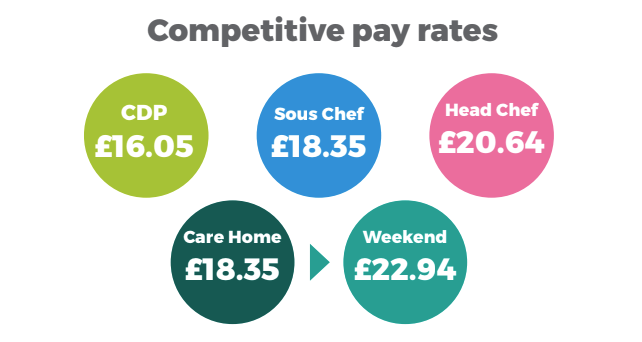
Competitive rates of pay. Our current rate for a cook is £16ph.
Our Monthly Bonus Scheme - Complete 166 hours per month (just under 38.5 hours per week) and you will receive £100 bonus. This will be paid monthly.
Our Refer a Chef scheme – If you refer a chef to us you will receive £150 when the chef completes 5 shifts. The chef you refer will receive £75 on completion of 5 shifts.
Access to our online benefit partners, Pirkx - a benefit scheme for courses, health, wellbeing, shopping and more! For more information visit www.pirkx.com
Where can you work as an Executive Chef?
What our Chefs say!
I like working for The Chef Tree because of the freedom and the flexibility
You get to go to different venues, you’re not stuck in the same job endlessly, not boring. You don’t have to go back when you don’t like somewhere and there is a variety of jobs.
Working for The Chef Tree is completely different from being a full-time chef
You choose the hours you want to do, fill in your portal, and everything is
arranged around that
Dont just take our word for it
Dont just take our word for it, This is what our chefs say about working for the chef tree
Registration is quick and easy!
If you're looking for a new chef job and want to start right now then we can help!
Complete the form and we'll call you right back.
Step 1 of 1
Call us: 071 8604 611