
Working as a Chef in a University Kitchen
The great news about working as a chef in a University (or Uni) setting is the sheer variation of food on offer. Universities are usually huge campuses that need to cater for a huge number of students who may all have different expectations of what to expect from a kitchen. So it is likely that Universities will offer regular sit down dining on campus for students who want this and at the same time offer more casual dining experiences like sandwiches and take away dishes that they can enjoy with their friends and classmates. Many first year students will have paid up front for their accommodation and food and will be expecting some varied and substantial offerings from the kitchens of their University. Many Universities offer 24 hour food service to accommodate the needs of students who may be studying through the night to meet important deadlines.
What skills do you need to work in a University kitchen?
A University cafeteria, alive with the clack of trays, din of conversation and busy atmosphere, exudes the appearance of controlled chaos. However, behind the scenes, the cafeteria is a tightly run ship. When the responsibility of feeding hundreds/thousands of students and hundereds of staff members on campus each day falls on your shoulders, planning and organization are the keys to success.
Ensure that each member of the cafeteria staff, including cashiers, servers and dishwashers, is fully trained. Create and distribute written job descriptions that detail the responsibilities of each position, and communicate policy and procedure changes to the cafeteria workers, both verbally and in writing. Hold regular training sessions that maintain morale and hone skills.
Ensure that servers practice proper portion control by measuring each serving correctly. Costs are always a concern in any University system, and dishing out over-sized portions raises food costs needlessly and adds unnecessary calories to the students’ meals.
Practice proper food preparation methods to eliminate allergic responses in students with food sensitivity issues. Monitor ingredients by reading labels and avoid cross-contamination — the mixing of allergen-free food with allergens such as wheat, dairy and legumes — by dedicating a special part of the kitchen to the preparation of these dishes. Keep allergen-free foods covered and stored in clean containers that have not come in contact with allergens, and serve them with utensils that meet the same standards.
Save waste by purchasing the proper amount of food and ingredients. Food that spoils before it is used is another needless cost that Universities need not incur. Many Universities use computer programs that track inventory, calculate food costs and alert managers of the need to replace depleted items.
Chef Jobs





How does a University kitchen run?
Imagine the biggest and busiest kitchen you’ve ever worked in. And then imagine delivering food to a variety of different needs; from catered halls with regular meal times; to providing food for retail catering outlets; to delivered catering for events taking part of campus. One day you may be cooking for the students in catered halls and the next you could be preparing a banquet for visiting professionals.
It is likely therefore that you would be working a shift system similar to that found in any busy hospitality setting. Unlike schools, Universities need to feed their students at weekends so it is likely you will be asked to work these days.
What type of food do you cook in a University kitchen?
Keeping students well-nourished and healthy is the overarching mission of college and university food service operations. But, keeping hungry students on campus is a key challenge which operators face. A recent study found that “69% of students eat off-campus at least once a week” and only “33% of students are satisfied with their school’s food service facilities.” When dining options across campus are not on par with what students want, they’ll quickly become disengaged and leave campus to find what they’re craving.
College students manage full course loads, participate in clubs, play on sports teams, and get involved in the community. In some cases, they also maintain part-time or full-time jobs. With so many responsibilities on their plate, they don’t always have time to enjoy a sit-down meal at the cafeteria. To keep busy students well-nourished, it’s important operators understand the importance of offering flexible meal plans and convenient grab-and-go options, like:
-
Pre-packaged salads, wraps, and sandwiches
-
Fresh fruit and nuts
-
Smoothies chock-full of energy-boosting ingredients
-
Cheese and crackers
-
Yogurts and yogurt parfaits
-
Hummus and pita packs
Stagnant menus that never change or just keep rotating on the same schedule leads to every foodservice operator’s nightmare: MENU FATIGUE.
Symptoms include culinary-boredom and disinterest in any consumable item your business has to offer. This causes students to leave campus – typically with their friends – to find something new and exciting to eat. The good news is that operators can combat the causes of menu fatigue before they even occur.
-
Promote Limited-Time Offers: LTOs are a low-cost, high-profit avenue to drive excitement, fuel consumer urgency, and increase sales.
-
Update Menus Regularly: Updating menus on a regular basis keeps students interested in what you have to offer. If it’s the same menu day after day, year after year, they’ll leave campus to satisfy their hunger.
-
Add Seasonal Menu Items: Incorporating in-season ingredients, flavors, and dishes is a popular way to keep students interested year-round. For example, create warm, sweet potato bisque in the cooler fall and winter months. Come spring and summer, offer chilled fruit soup.
-
Stay on Top of Food Trends: Do you know what’s trending across the industry? Understanding dishes consumers want and updating menus to reflect current trends boosts sales and encourages loyalty among student diners, whilst keeping to your budget.
-
Offer Special Menu Items Around Holidays: Holiday-related menu items provide a big opportunity for driving engagement, promoting LTOs, and increasing sales. Since these offerings are only available for a short time, students are more motivated to buy now, before they’re gone.
What experience do you need to work in a University kitchen?
To work on campus in a University kitchen you should have professional cooking experience and have;
-
Experience with fresh food (from scratch cooking)
-
Able to be part of a small team
-
Positive can-do attitude
-
Passionate about food
-
Able to work to budgets and KPI’S
-
Punctual & presentable
-
Problem solver
-
Familiar with standard kitchen equipment and practices
You get to go to different venues, you’re not stuck in the same job endlessly, not boring. You don’t have to go back when you don’t like somewhere and there is a variety of jobs.
Working for The Chef Tree is completely different from being a full-time chef. You choose the hours you want to do, fill in your portal, and everything is arranged around that.
What does The Chef Tree Pay for a University kitchen Chef?
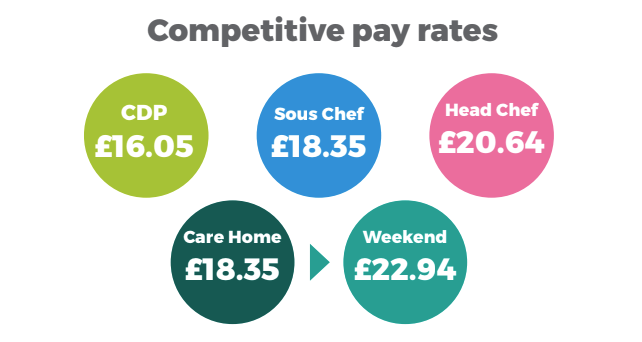
Our rates are dependent on your experience but a CDP can expect to earn £14 p.h, a sous chef, £16 p.h, a Head chef, £18 p.h and an Executive chef or weekend care home chef, £20 p.h.
What are the benefits of working for TCT?
When you join The Chef Tree you will be entitled to the following amazing benefits;
Competitive rates of pay. Our current rate for a cook is £16ph.
Our Monthly Bonus Scheme - Complete 166 hours per month (just under 38.5 hours per week) and you will receive £100 bonus. This will be paid monthly.
Our Refer a Chef scheme – If you refer a chef to us you will receive £150 when the chef completes 5 shifts. The chef you refer will receive £75 on completion of 5 shifts.
Access to our online benefit partners, Pirkx - a benefit scheme for courses, health, wellbeing, shopping and more! For more information visit www.pirkx.com
Where can you work as a University Chef?
What our Chefs say!
I like working for The Chef Tree because of the freedom and the flexibility
You get to go to different venues, you’re not stuck in the same job endlessly, not boring. You don’t have to go back when you don’t like somewhere and there is a variety of jobs.
Working for The Chef Tree is completely different from being a full-time chef
You choose the hours you want to do, fill in your portal, and everything is
arranged around that
Dont just take our word for it
Dont just take our word for it, This is what our chefs say about working for the chef tree
Registration is quick and easy!
If you're looking for a new chef job and want to start right now then we can help!
Complete the form and we'll call you right back.
Step 1 of 1
Call us: 071 8604 611